Bilaal ibn Rabah: The Call to Freedom, The Echo of Tawhid, and Africa’s Eternal Light
How magnificent are the names that carry generations of light and defiance! The biography of Bilaal ibn Rabah al-Habashi (may Allah be pleased with him) is not just a historical account; it is an eternal anthem recited about the rejection of servitude, the absolute value of faith, and the status of Africans in early Islam. This is the story that must be told and broadcast by Bilaal TV.
First: From the Chains of Slavery to the Heights of Monotheism
Bilaal was born in Abyssinia (Habasha) and arrived in Makkah as a slave owned by Umayyah ibn Khalaf. He owned nothing but his great soul and innate dignity. When the dawn of Islam broke, Bilaal did not hesitate to answer the call of Muhammad (peace be upon him).
His conversion was a declaration of an existential war against oppression: the choice was either the slave falling under his master's whip or the man rising tall with the freedom of his creed.
His early sacrifices are etched in the Ummah's memory: stripped of his clothing, thrown onto Makkah’s scorching sand, with heavy rocks placed upon his chest. Yet, the only reply emanating from his strained breaths was: "Ahad... Ahad..." (One, One).
This steadfastness, this heroic rejection of slavery, is a lesson for every oppressed person: Human dignity cannot be bought or sold, and the voice of truth cannot be stifled by iron and fire.
Second: Bilaal the African... The Prophet's Muezzin
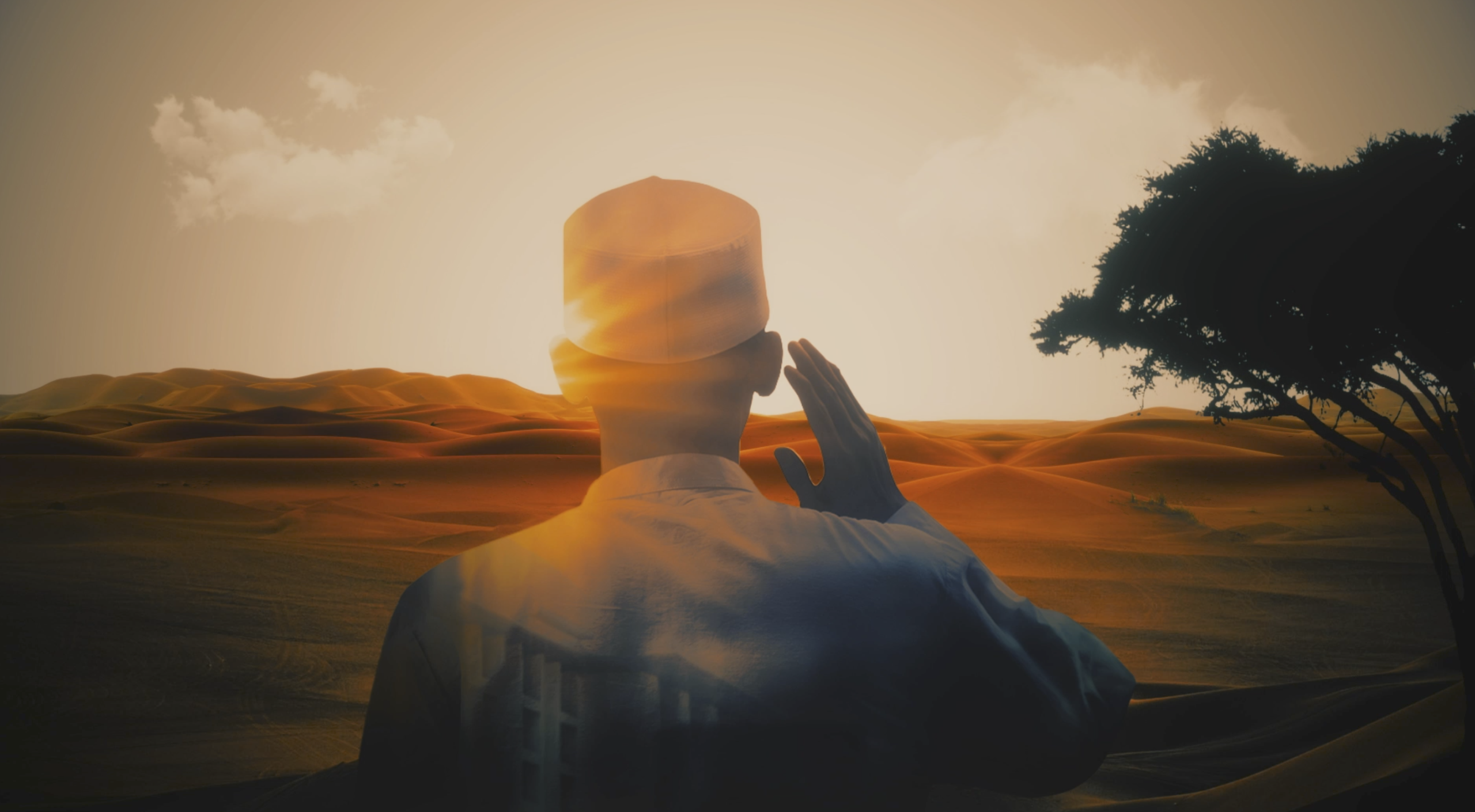
The Prophet Muhammad’s (PBUH) choice of Bilaal to be the first Muezzin in Islam was an eternal divine message. In a society dominated by tribal and colour prejudice, Allah chose this African servant to stand proudly atop the Kaaba and raise the majestic call to Monotheism (Adhan).
Bilaal's voice was not just a call to prayer; it was a historical proclamation:
A Declaration of Equality: His Adhan leveled the playing field between the Arab and the non-Arab, the black and the white.
An African Honour: The Prophet (PBUH) made Bilaal a core Islamic symbol; the believer's faith is not complete without hearing the call of his African Muezzin.
This sublime status achieved by Bilaal was not due to his lineage but to his piety and sincerity, confirming that Africa was and will remain an authentic and honoured part of the Prophetic message.
Third: The Witness to Paradise and the Legacy of Sacrifice
Bilaal’s significance did not stop at the Adhan; his honour reached the highest ranks. One day after Fajr prayer, the Prophet (PBUH) asked him:
"O Bilaal, tell me of the most hopeful deed you have done in Islam, for I heard the sound of your sandals before me in Paradise!"
Bilaal replied with the humility of the enlightened:
"I have not done any deed more hopeful to me than that I never perform ablution (Wudu) in any hour of the night or day except that I pray with that Wudu whatever was decreed for me to pray."
This is Bilaal's Eternal Sunnah: two rak'ahs (units) after every Wudu, a simple yet profound act of maintaining purity and connection with Allah. The Prophet's testimony of his place in Paradise confirms that sacrificing the transient world for the sake of "Ahad Ahad" earned him the highest reward.
Conclusion: Bilaal's Message for Bilaal TV
Bilaal ibn Rabah is the perfect symbol for a Dawah channel launching from Africa in the English language. His story teaches us that: Faith creates leaders from every race, and the voice of truth is stronger than the chains of slavery.
Let the call of Bilaal TV be a fresh echo of Bilaal's voice—a call for freedom, for Monotheism, and for highlighting the rightful place of Africa and its scholars in the luminous record of Islamic Civilization.