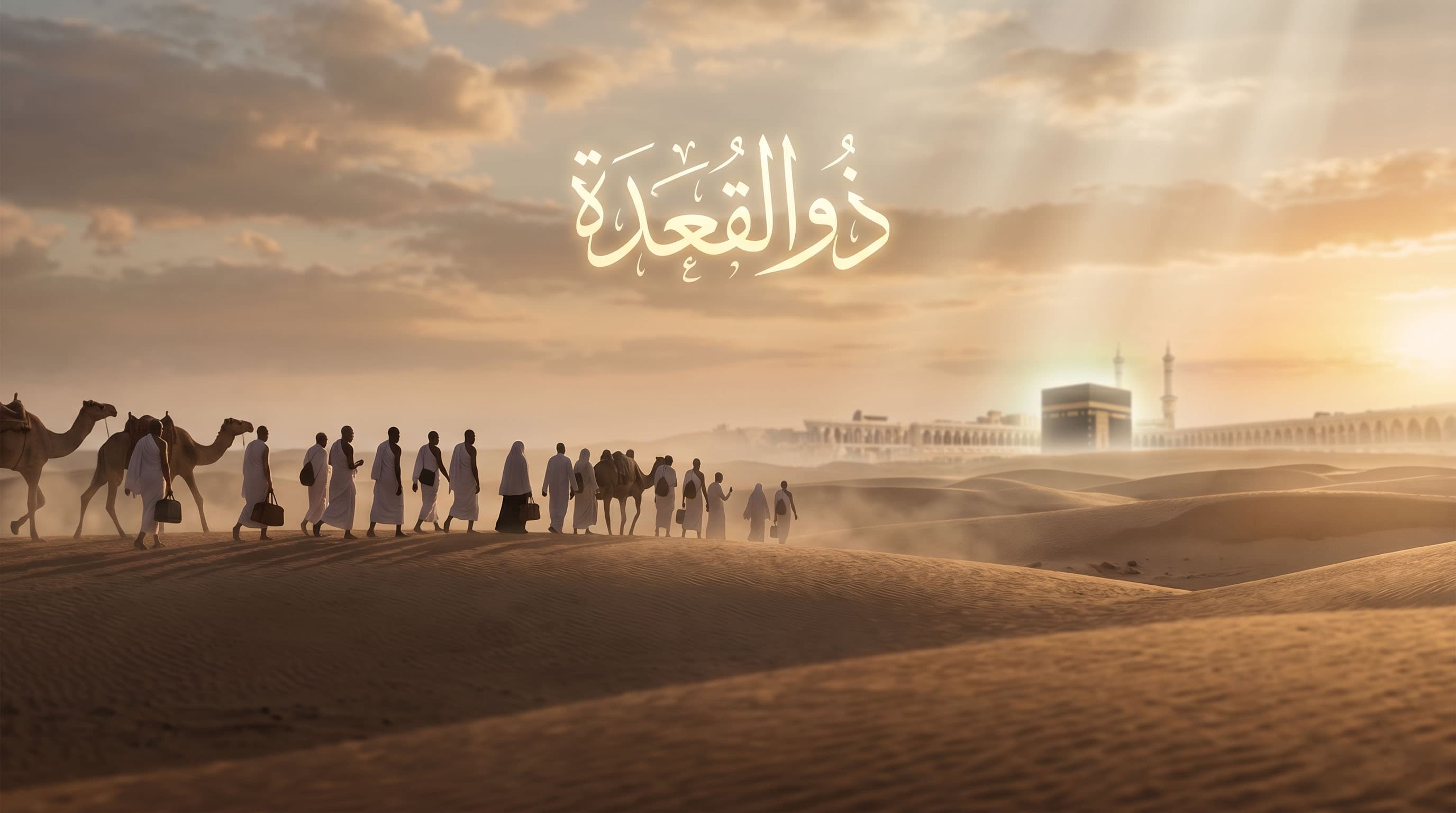
Among the twelve months of the Islamic lunar calendar, four have been honoured by Allah with a sacred status. These are known as the Ashḥur al-Ḥurum, the Sacred Months, and they are Dhul Qa’dah, Dhul Ḥijjah, Muharram, and Rajab. Dhul Qa’dah is the eleventh month of the Islamic year and the first of three consecutive sacred months, followed by Dhul Ḥijjah and Muharram.
The Meaning of the Name
The name Dhul Qa’dah (ذو القعدة) comes from the Arabic root qa’ada, meaning “to sit” or “to remain.” Historically, the Arabs of the pre-Islamic era would cease all warfare and conflict during this month. They would “sit”, laying down their weapons and resting from the hardships of battle, in preparation for the pilgrimage season that followed in Dhul Ḥijjah.
This tradition of peace was not merely cultural; it was a divine command affirmed and continued by Islam.
The Sacred Status of Dhul Qa’dah
Allah, the Most High, says in the Qur’an:
"The number of months in the sight of Allah is twelve (in a year)- so ordained by Him the day He created the heavens and the earth; of them four are sacred: that is the straight usage. So wrong not yourselves therein, and fight the Pagans all together as they fight you all together. But know that Allah is with those who restrain themselves."
(Surah At-Tawbah, 9:36)
The Prophet ⸿ confirmed which months these are:
"(The division of time has turned to its original form which was current when Allah created the Heavens and the Earths.) The year is of twelve months, out of which four months are sacred: Three are in succession, Dhul-Qa'da, Dhul-Hijja and Muharram, and (the fourth is) Rajab of (the tribe of) Mudar which comes between Jumadi-ath-Thaniyah and Sha'ban."
(Sahih al-Bukhari 3197, Book 59, Hadith 8)
The sacred status of these months means that sin committed within them is graver than sin committed at other times, and righteous deeds carry greater weight and reward.
A Month of Peace and Suspension of Conflict
One of the defining characteristics of Dhul Qa’dah is the prohibition of initiating aggression. The scholars of Islam have noted that while defensive warfare is never prohibited, launching offensive campaigns during the sacred months is something that was historically avoided out of reverence for their sanctity.
This month reminds the believer that peace, stability, and cessation from strife are values deeply embedded in the Islamic worldview. In a world filled with conflict, Dhul Qa’dah is a divine invitation to pause, reflect, and return to a state of inner and outer calm.
Dhul Qa’dah and the Umrah of the Prophet ⸿
A particularly significant historical connection to this month is that the Prophet ⸿ performed all three of his Umrahs during Dhul Qa’dah:
- The first was the Umrat al-Ḥudaybiyyah in the sixth year after Hijra, which was prevented by the Quraysh but resulted in the Treaty of Hudaybiyyah.
- The second was the Umrat al-Qaḍā’ in the seventh year, fulfilling the terms of the treaty.
- The third was the Umrat al-Jiʼrānah in the eighth year, after the conquest of Makkah.
This connection further elevates the virtue of this month and makes it a time associated with the sacred journey toward the House of Allah.
How to Honour Dhul Qa’dah
While there are no specific legislated acts of worship exclusive to Dhul Qa’dah, the sacred nature of the month calls the believer to:
- Increase in general acts of worship. Such as voluntary prayers, recitation of the Qur’an, and remembrance of Allah (dhikr).
- Guard the tongue and limbs from sin. Knowing that transgressions in sacred months carry greater consequence.
- Begin preparation for Dhul Ḥijjah. The month of Hajj follows immediately. Those intending to perform Hajj should use Dhul Qa’dah to prepare spiritually, financially, and physically.
- Increase in fasting. The Prophet ⸿ encouraged fasting the sacred months in general, and scholars have recommended voluntary fasts during this time.
- Reflect on the purpose of life. The spirit of “sitting” and pausing that gives the month its name is an invitation to introspection and renewal of one’s relationship with Allah.
A Gateway to the Greatest Days
Dhul Qa’dah is not merely a transition month but a sacred threshold. What follows it is Dhul Ḥijjah, which contains the ten best days of the entire year, the Day of ‘Arafah, and the celebration of Eid al-Adḥa. The believer who honours Dhul Qa’dah by guarding themselves from sin and drawing closer to Allah enters those greatest days with a purified heart and a prepared soul.
May Allah allow us to live through Dhul Qa’dah with gratitude, awareness, and devotion, and to reach the blessed days of Dhul Ḥijjah in a state of spiritual readiness.