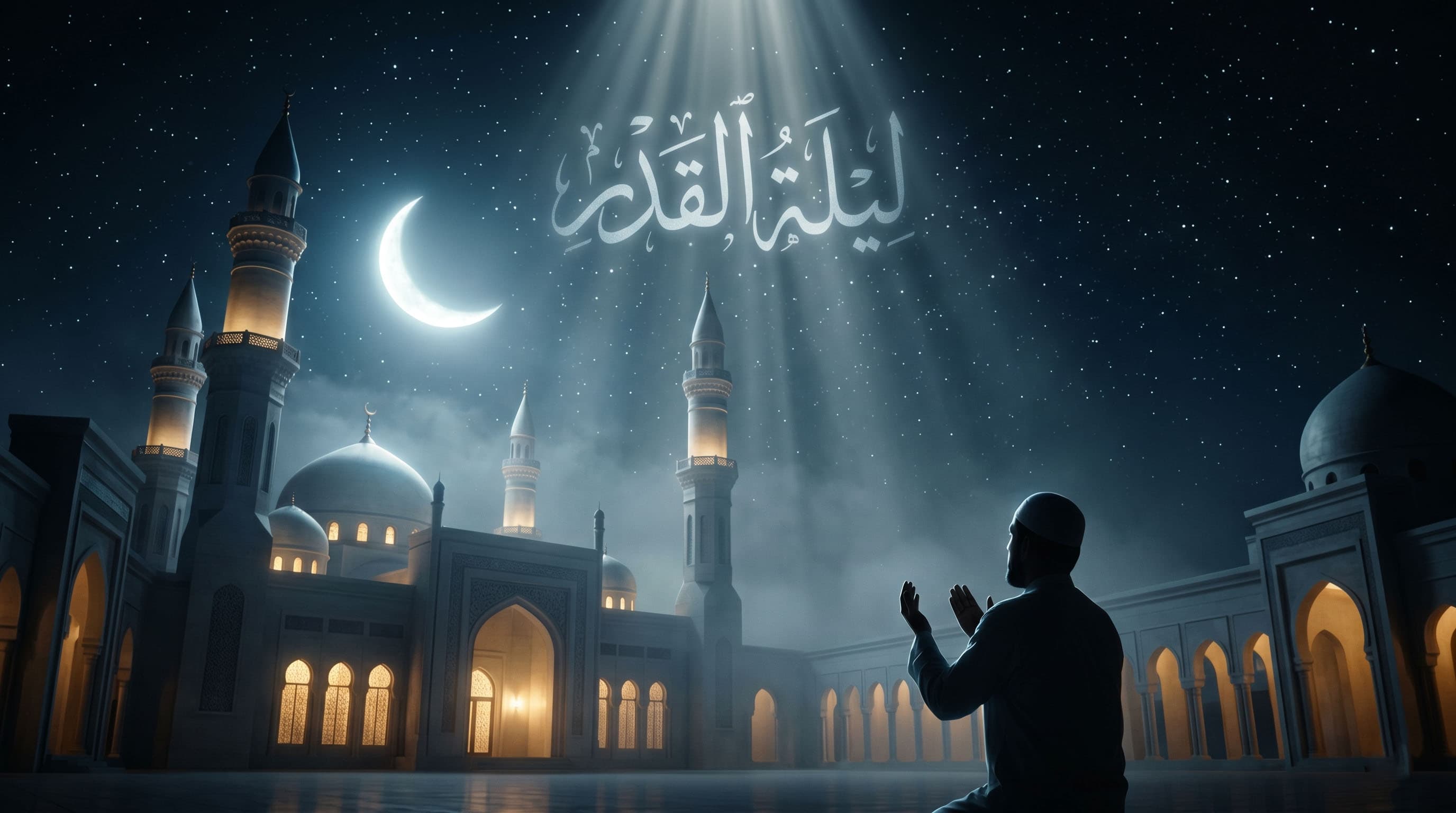
Among the greatest gifts Allah has bestowed upon this Ummah is a single night, a night so immense in reward that it outweighs a lifetime of devotion. Laylat al-Qadr, the Night of Decree, is the crown of the holy month of Ramadan and one of the most significant events in the entire Islamic calendar. To understand it is to understand the mercy and generosity of Allah, the Most High.
What Is Laylat al-Qadr?
Laylat al-Qadr (ليلة القدر) is the blessed night in which the Qur'an was first revealed to the Prophet ﷺ. Allah honoured it with an entire chapter, Surah Al-Qadr, in which He describes its extraordinary status:
"We have indeed revealed this (Message) in the Night of Power: And what will explain to thee what the night of power is? The Night of Power is better than a thousand months. Therein come down the angels and the Spirit by Allah's permission, on every errand: Peace!... This until the rise of morn!"
(Surah Al-Qadr, 97:1–5)
A thousand months is eighty-three years and four months. In a single night, the sincere believer who stands in worship with faith and hope in Allah's reward can accumulate more than a lifetime's worth of good deeds.
The Virtue of Standing in Prayer on This Night
The Prophet ﷺ explicitly encouraged the believers to seek this night and to stand in prayer during it:
"Whoever stands (in prayer) on Laylat al-Qadr out of faith and in the hope of reward, his previous sins will be forgiven."
(Sahih al-Bukhari 1901, Book 30, Hadith 11; Sahih Muslim 760a, Book 6, Hadith 209)
This forgiveness is not conditional on lengthy recitation or complex rituals. It requires only two things: sincere faith in Allah, and genuine hope in His mercy. These are conditions attainable by every believer, regardless of their level of knowledge or devotion.
When to Seek Laylat al-Qadr
The exact night has been concealed from us, a divine wisdom that encourages us to strive throughout the final ten nights rather than resting on a single evening. The Prophet ﷺ said:
"Seek Laylat al-Qadr in the odd nights of the last ten nights of Ramadan."
(Sahih al-Bukhari 2017, Book 32, Hadith 4)
The odd nights, the 21st, 23rd, 25th, 27th, and 29th, are therefore of particular importance. Many scholars hold the 27th night in especially high regard based on strong narrations, though certainty of the exact date remains with Allah alone. This concealment is itself a mercy: it compels the believer to give their best across all ten nights rather than holding back for one.
Signs of Laylat al-Qadr
The Prophet ﷺ mentioned certain signs associated with this night to help the believer recognise it:
- The sun rises mildly the following morning. The Prophet ﷺ described it as rising "without rays, as if it were a tray." (Sahih Muslim, 762)
- The night is calm and temperate. Neither excessively hot nor bitterly cold. (Sahih Ibn Khuzaymah 2192)
The Best Supplication for This Night
The Mother of the Believers, Sayyidah 'Aisha (may Allah be pleased with her), asked the Prophet ﷺ: "O Messenger of Allah, if I know which night is Laylat al-Qadr, what should I say?" He ﷺ replied:
"Say: O Allah, You are Forgiving and You love forgiveness, so forgive me."
Allāhumma innaka 'afuwwun tuḥibbu al-'afwa fa'fu 'annī
(Jami` at-Tirmidhi 3513, Book 48, Hadith 144; Sunan Ibn Majah 3850, Book 34, Hadith 24)
This simple, profound supplication encapsulates the spirit of the night, turning to Allah in humility, acknowledging His attribute of forgiveness, and asking for what the heart truly needs.
How to Make the Most of the Last Ten Nights
The Prophet ﷺ would devote himself completely to worship during the final ten nights of Ramadan. His wife Sayyidah 'Aisha (may Allah be pleased with her) reported:
"When the last ten days of Ramadan began, the Prophet ﷺ would tighten his waist-wrapper, spend his nights in worship, and wake his family."
(Sahih al-Bukhari 2024, Book 32, Hadith 11; Sahih Muslim 1174, Book 14, Hadith 8)
Following his blessed example, the believer should:
- Pray Qiyam al-Layl (night prayer). Even a few rak'ahs performed with presence of heart are better than many performed mechanically.
- Recite and reflect on the Qur'an. This is the night the Qur'an descended; honouring it through recitation is deeply fitting.
- Give generously in charity (Sadaqah). Charity given on this night carries a reward multiplied beyond imagination, as every act of worship is amplified.
- Make abundant dhikr and du'a. Seek forgiveness, ask for the well-being of those you love, and pour out whatever is in your heart before Allah.
- Observe I'tikaf. Seclusion in the mosque during the last ten days was the consistent practice of the Prophet ﷺ and is among the most powerful ways to focus entirely on worship.
A Night of Limitless Mercy
Laylat al-Qadr is not merely an occasion but a divine mercy, offered annually to a community that would otherwise fall short. Allah, in His infinite generosity, places before every believer a night in which the scales of a lifetime can be tipped, sins can be erased, and destinies written anew.
Do not let it pass in heedlessness. Even if the body is weak and the night feels long, a single sincere prostration before Allah in that blessed darkness is worth more than years of distracted worship.
May Allah grant us the blessing of reaching Laylat al-Qadr in a state of faith and devotion, and may He accept our worship, forgive our shortcomings, and write us among those freed from the Fire.