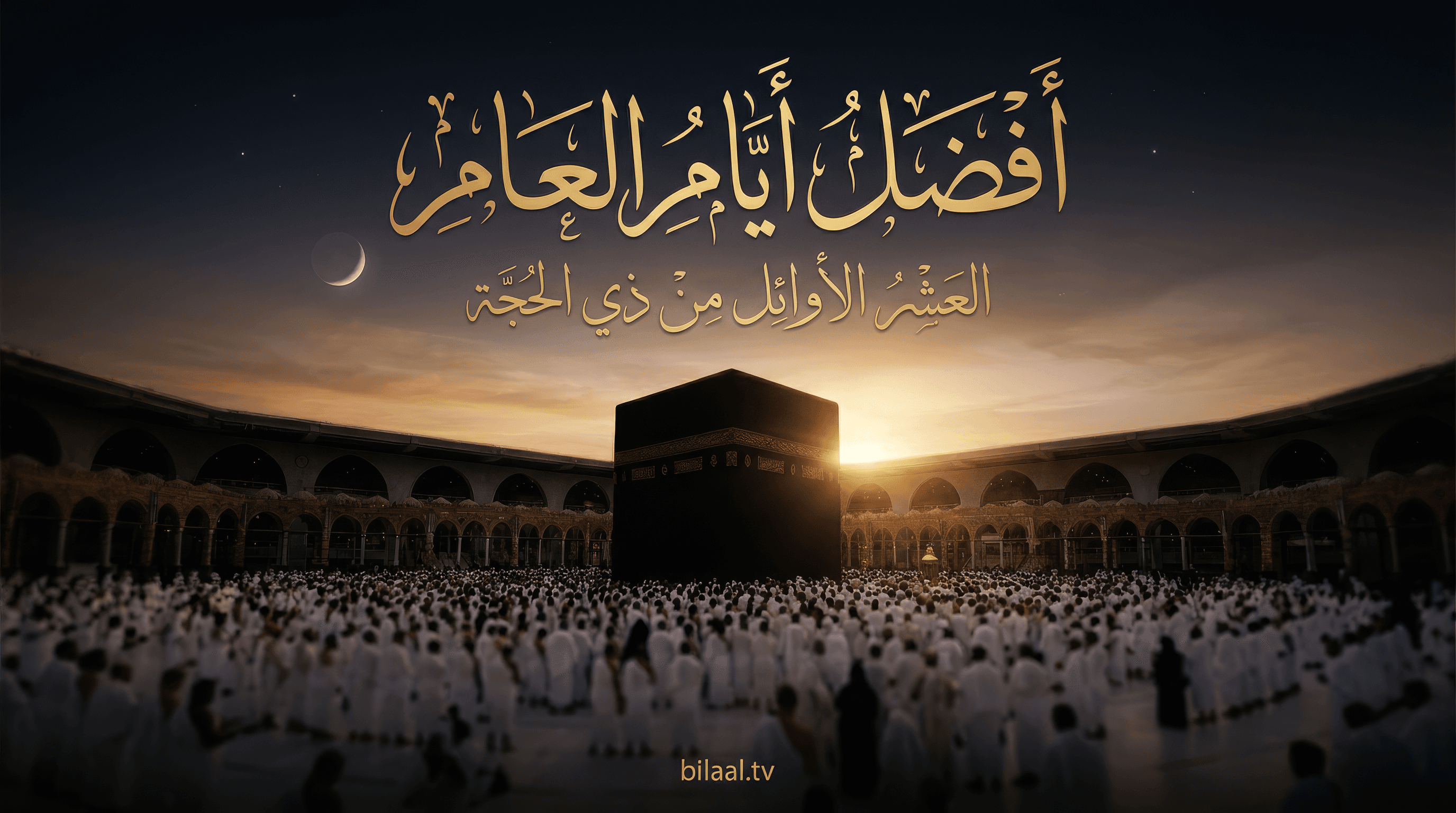
Did you know there are days in the year when rewards are multiplied, supplications are answered, and the gates of repentance are flung wide open? Days so sacred that Allah, the Most High, swore by them in His eternal Book? These are the first ten days of Dhul Hijjah, the best days on the face of the earth.
Allah's Divine Oath Over These Days
Allah honoured these days with the greatest distinction, an oath in the Qur'an itself. He says in Surah Al-Fajr:
"By the break of Day By the Nights twice five;"
(Surah Al-Fajr, 89:1–2)
The great companion 'Abdullah ibn 'Abbas (may Allah be pleased with him), along with the majority of scholars of Qur'anic exegesis, affirmed: "The ten nights are the first ten days of Dhul Hijjah." Allah does not swear by something except that it is of immense greatness and nobility.
He further mentions these days in the context of Hajj:
""That they may witness the benefits (provided) for them, and celebrate the name of Allah, through the Days appointed, over the cattle which He has provided for them (for sacrifice): then eat ye thereof and feed the distressed ones in want."
(Surah Al-Hajj, 22:28)
Ibn 'Abbas explained that the "appointed days" are the ten days of Dhul Hijjah, the days in which the rites of Hajj reach their peak and pilgrims gather from every distant mountain pass.
The Prophet's ﷺ Testimony
The Qur'an's honouring of these days was not enough, the Prophet ﷺ came to reveal to us, in his own blessed words, why they are so special. Ibn 'Abbas (may Allah be pleased with him) reported that the Messenger of Allah ﷺ said:
"No good deeds done on other days are superior to those done on these (first ten days of Dhul Hijja)." Then some companions of the Prophet ﷺ said, "Not even jihad?" He replied, "Not even jihad, except that of a man who does it by putting himself and his property in danger (for Allah's sake) and does not return with any of those things."
(Sahih al-Bukhari 969, Book 13, Hadith 18)
Reflect on the weight of this hadith. Jihad, striving in the path of Allah, is considered the pinnacle of Islamic practice. Yet righteous deeds performed in these ten days are more beloved to Allah than even that. The only exception is the one who sacrifices everything, his life and his wealth, and does not return. This is a virtue beyond description.
Why Are These the Greatest Days?
The great scholar Imam Ibn Hajar al-'Asqalani wrote in Fath al-Bari: "What appears to be the reason for the distinction of the ten days of Dhul Hijjah is that they bring together the greatest acts of worship, prayer, fasting, charity, and Hajj, and this does not occur in any other period."
These ten days gather within them:
- Hajj. The fifth pillar of Islam, performed in these very days
- Fasting. Especially the fast of the Day of 'Arafah
- Prayer and remembrance. Including the Eid prayer and the takbirat of these days
- Charity and sacrifice. The rite of Eid al-Adha
It is no wonder, then, that they are the most beloved days to Allah. They are an exceptional season of worship, drawing closer to the Divine.
The Best Deeds to Perform in These Ten Days
1. Fasting: Especially on the Day of 'Arafah
Hafsa (may Allah be pleased with her) reported: "There are four things which the Prophet never gave up: Fasting 'Ashura', (fasting during) the ten days, (fasting) three days of each month, and praying two Rak'ahs before Al-Ghadah (Fajr)." (Sunan an-Nasa'i 2416, Book 22, Hadith 327)
The ninth day, the Day of 'Arafah, holds an especially exalted position. The Prophet ﷺ said:
"I seek from Allah that fasting on the day of 'Arafa may atone for the sins of the preceding and the coming years."
(Sahih Muslim 1162a, Book 13, Hadith 252)
One day of fasting, and two full years of sins erased. Is there a more profitable transaction than this? This is also the day on which Allah completed His religion and perfected His favour upon us, as He declared:
"Forbidden to you (for food) are: dead meat, blood, the flesh of swine, and that on which hath been invoked the name of other than Allah; that which hath been killed by strangling, or by a violent blow, or by a headlong fall, or by being gored to death; that which hath been (partly) eaten by a wild animal; unless ye are able to slaughter it (in due form); that which is sacrificed on stone (altars); (forbidden) also is the division (of meat) by raffling with arrows: that is impiety. This day have those who reject faith given up all hope of your religion: yet fear them not but fear Me. This day have I perfected your religion for you, completed My favour upon you, and have chosen for you Islam as your religion. But if any is forced by hunger, with no inclination to transgression, Allah is indeed Oft-forgiving, Most Merciful."
(Surah Al-Ma'idah, 5:3)
2. The Virtue of These Days, and Increasing in Tahlil, Takbir, and Tahmid
Allah commanded us to remember Him in these blessed days:
"Celebrate the praises of Allah during the Appointed Days. But if any one hastens to leave in two days, there is no blame on him, and if any one stays on, there is no blame on him, if his aim is to do right. Then fear Allah, and know that ye will surely be gathered unto Him."
(Surah Al-Baqarah, 2:203)
The Prophet ﷺ named this virtue directly, and named three things to increase in these days: 'Abdullah ibn 'Umar (may Allah be pleased with him) reported that the Prophet ﷺ said:
"There are no days greater in the sight of Allah, nor is any deed more beloved to Him in them, than in these ten days. So increase in them your tahlil (lā ilāha illallāh), your takbir (Allāhu akbar), and your tahmid (al-hamdu lillāh)."
(Musnad Ahmad 5446)
This is corroborated by the practice al-Bukhari records. He opens his chapter on the merit of deeds in these days with reports from the Companions rather than with a narration from the Prophet ﷺ. Ibn 'Abbas (may Allah be pleased with him) explained that the well-known days Allah names are the first ten of Dhul Hijjah. And Ibn 'Umar and Abu Hurayra (may Allah be pleased with them) used to go out to the market during those ten days saying takbir, and the people would say takbir after their takbir. These are reports of what the Companions did, not sayings of the Prophet ﷺ. (Sahih al-Bukhari, Book of the Two Festivals, chapter heading before Hadith 969)
Al-Bukhari's chapter establishes that the Companions said takbir in these days. It does not give their wording. One reported wording from the Companions is:
Allāhu akbar, Allāhu akbar, lā ilāha illallāh, wallāhu akbar, Allāhu akbar, wa lillāhil-hamd.
This is reported of 'Abdullah ibn Mas'ud (may Allah be pleased with him), who said it during the days of Tashriq, and the like of it is reported of 'Umar and 'Ali (may Allah be pleased with them). (Musannaf Ibn Abi Shaybah 2/168; the chain called jayyid by Ibn al-Humam, Fath al-Qadir 2/82) It is one of several wordings the early generations used. No particular wording is required.
3. Sincere Repentance
These days are a tremendous opportunity for anyone who has fallen into sin to return to their Lord with a sincere and contrite heart. Allah says:
"And say to the believing women that they should lower their gaze and guard their modesty; that they should not display their beauty and ornaments except what (must ordinarily) appear thereof; that they should draw their veils over their bosoms and not display their beauty except to their husbands, their fathers, their husband's fathers, their sons, their husbands' sons, their brothers or their brothers' sons, or their sisters' sons, or their women, or the slaves whom their right hands possess, or male servants free of physical needs, or small children who have no sense of the shame of sex; and that they should not strike their feet in order to draw attention to their hidden ornaments. And O ye Believers! turn ye all together towards Allah, that ye may attain Bliss."
(Surah An-Nur, 24:31)
The Prophet ﷺ said: "Allah, the Exalted and Glorious, Stretches out His Hand during the night so that the people may repent for the fault committed from dawn till dusk and He stretches out His Hand during the day so that the people may repent for the fault committed from dusk to dawn." (Sahih Muslim 2759a, Book 50, Hadith 36) How much more so, then, in the most beloved days of the entire year?
4. Charity, Maintaining Ties of Kinship, and Good Deeds
The excellence of these days is not confined to ritual worship alone, every righteous act is multiplied. The Prophet ﷺ said: "No good deeds done on other days are superior to those done on these (first ten days of Dhul Hijja)." (Sahih al-Bukhari 969, Book 13, Hadith 18)
Feed a neighbour. Call a relative. Give generously to those in need. Help someone who is struggling. Every single good deed in these days carries extraordinary weight in the sight of Allah.
5. The Sacrifice (Udhiyah) on Eid al-Adha
Among the greatest acts of worship in this blessed season is the udhiyah, the animal sacrifice, on the tenth of Dhul Hijjah, the Day of Eid. Allah says:
"Therefore to thy Lord turn in Prayer and Sacrifice."
(Surah Al-Kawthar, 108:2)
The Prophet ﷺ performed the udhiyah himself. Anas (may Allah be pleased with him) reported:
"The Prophet (ﷺ) offered as sacrifices, two horned rams, black and white in color. He slaughtered them with his own hands and mentioned Allah's Name over them and said Takbir and put his foot on their sides."
(Sahih al-Bukhari 5565, Book 73, Hadith 21)
The Day of 'Arafah: The Crown of All Days
The ninth day of Dhul Hijjah is the noblest of the ten and the greatest of the entire year. On this day, pilgrims stand on the plain of 'Arafah in a scene unlike any other, calling upon their Lord, weeping before Him, while Allah descends to the lowest heaven and boasts of them to His angels.
The Prophet ﷺ said:
"There is no day when God sets free more servants from Hell than the Day of 'Arafa. He draws near, then praises them to the angels, saying: What do they want?"
(Sahih Muslim 1348, Book 15, Hadith 492)
The Day of 'Arafah is the day of Hajj itself, the Prophet ﷺ declared: "Hajj is 'Arafah." (Ahmad and al-Tirmidhi) Whoever is not performing Hajj can still share in its blessings by fasting, a single fast that wipes away the sins of two years.
A Practical Guide: How to Invest These Ten Days
| Day | Recommended Acts |
|---|---|
| Days 1–8 | Fasting · Takbir and dhikr · Reciting the Qur'an · Charity · Maintaining kinship · Abundant supplication |
| Day of 'Arafah (9) | Fasting (the most important day for non-pilgrims) · Supplication and humility · Repentance and seeking forgiveness · Intensive remembrance of Allah |
| Day of Eid (10) | Eid prayer · Animal sacrifice (udhiyah) · Takbirat of Eid · Bringing joy to family and the poor |
An Important Note: Refraining from Hair and Nails
Umm Salamah (may Allah be pleased with her) reported that the Prophet ﷺ said:
"If anyone of you intends to offer sacrifice he should not get his hair cut or nails trimmed."
(Sahih Muslim 1977d, Book 35, Hadith 54)
Whoever intends to offer an udhiyah should refrain from cutting their hair or trimming their nails from the beginning of Dhul Hijjah until after the sacrifice is performed.
Do Not Let This Season Pass You By
This world is fleeting, life is short, and these days return only once a year. Ibn al-Qayyim (may Allah have mercy on him) said: "These days are days of striving and action. It is not befitting for a person of sound mind to let even a single moment pass in other than obedience and drawing closer to Allah."
These ten days are a divine gift. The Lord of all worlds opens for you in them a door of mercy and forgiveness unlike any other time of year. Make your intention now: fast as many of the ten days as you are able, increase your remembrance and praise, give generously in charity, seek forgiveness and repent sincerely, and be good to those around you. Above all, guard the fast of the Day of 'Arafah, for it expiates two years of sins.
Allah says at the conclusion of the verses on Hajj:
"O ye who believe! bow down, prostrate yourselves, and adore your Lord; and do good; that ye may prosper."
(Surah Al-Hajj, 22:77)
We ask Allah the Magnificent, Lord of the Magnificent Throne, to allow us to reach these blessed days in good health, to help us fill them with the finest deeds, and to accept from us and from you our righteous acts. Ameen.