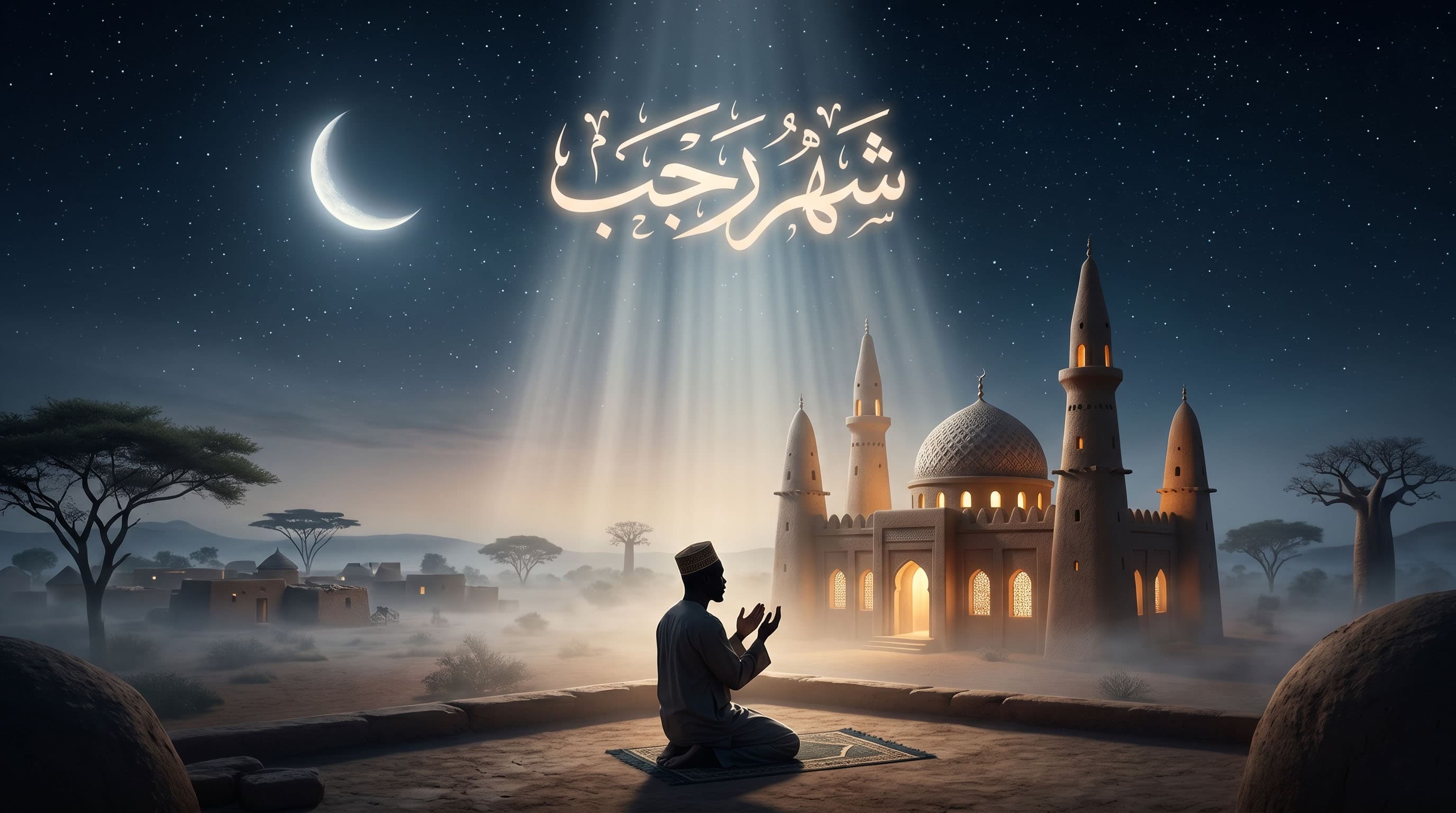
The month of Rajab occupies a distinguished position in the Islamic calendar. It is one of the four months that Allah, the Most High, has designated as sacred, months in which the sanctity of life and the weight of deeds are elevated above the ordinary. For the believer who wishes to journey toward Ramadan in a state of spiritual readiness, Rajab is an invaluable gift.
Rajab: One of the Sacred Months
Allah declares in the Qur'an:
"The number of months in the sight of Allah is twelve (in a year)- so ordained by Him the day He created the heavens and the earth; of them four are sacred: that is the straight usage. So wrong not yourselves therein, and fight the Pagans all together as they fight you all together. But know that Allah is with those who restrain themselves."
(Surah At-Tawbah, 9:36)
The Prophet ﷺ identified these four months by name:
"(The division of time has turned to its original form which was current when Allah created the Heavens and the Earths.) The year is of twelve months, out of which four months are sacred: Three are in succession, Dhul-Qa'da, Dhul-Hijja and Muharram, and (the fourth is) Rajab of (the tribe of) Mudar which comes between Jumadi-ath-Thaniyah and Sha'ban."
(Sahih al-Bukhari 3197, Book 59, Hadith 8)
Rajab is unique among the four in standing alone, the other three form a consecutive sequence surrounding the Hajj season. For this reason it was historically known as Rajab al-Fard, the Solitary Rajab. It was also called Rajab al-Asamm, the Silent Month, because the sound of swords would fall silent during it, as the Arabs of old ceased all warfare out of reverence for its sacred status.
The Weight of Deeds in Sacred Months
The scholars of Islam have long emphasised that during the sacred months, both good deeds and sins carry greater weight than at other times. Ibn Kathir (may Allah have mercy on him) wrote in his Tafsir: "Wrongdoing during the sacred months is more serious and more sinful than at other times." Conversely, acts of righteousness, prayer, fasting, charity, and seeking forgiveness, yield a greater reward.
This dual reality calls the believer to a heightened state of awareness: guarding the heart and limbs from what displeases Allah, while increasing in what draws one nearer to Him.
A Gateway to Ramadan
Among the wisdoms of Rajab is its proximity to Sha'ban, which leads directly into Ramadan. The scholars of the past described this beautiful progression in a memorable expression:
"Rajab is the month of sowing, Sha'ban is the month of watering, and Ramadan is the month of harvest."
Whoever plants good habits in Rajab, consistency in prayer, recitation of Qur'an, and restraint from sin, will find those habits deepened in Sha'ban and will enter Ramadan with a prepared heart rather than a neglected one.
The Prophet ﷺ would make a heartfelt supplication as Rajab approached:
"O Allah, bless us in Rajab and Sha'ban, and allow us to reach Ramadan."
(Musnad Ahmad; narrated from Anas ibn Malik, may Allah be pleased with him)
The very fact that he ﷺ prayed to reach Ramadan, as if it were a destination to be journeyed toward, teaches us that the months preceding it are not empty time. They are a runway for the soul.
Rajab and the Night Journey of Al-Isra' wal-Mi'raj
Many scholars hold that the miraculous night journey of the Prophet ﷺ, when he was taken from the Sacred Mosque in Makkah to the Farthest Mosque in Jerusalem, and then ascended through the heavens to a station no created being had ever reached, occurred during the month of Rajab. While scholars differ on the precise date, the association has made Rajab a month of deep reflection upon one of the most extraordinary events in prophetic history.
Allah describes that sacred night in the Qur'an:
"Glory to (Allah) Who did take His servant for a Journey by night from the Sacred Mosque to the farthest Mosque, whose precincts We did bless,- in order that We might show him some of Our Signs: for He is the One Who heareth and seeth (all things)."
(Surah Al-Isra', 17:1)
The Isra' wal-Mi'raj was, at its heart, a moment of divine reassurance to a Prophet ﷺ who had endured years of loss and persecution. It was a reminder that Allah elevates those who are steadfast. In the heavens, the Prophet ﷺ received the gift of the five daily prayers, given directly, without intermediary, as a treasure for his Ummah until the end of time.
How to Honour Rajab
While there are no specific legislated rituals exclusive to Rajab beyond ordinary righteous practice, the sacred nature of the month invites the believer to:
- Seek sincere repentance (Tawbah). Beginning the month with a clean slate, letting go of persistent sins, and returning to Allah with genuine resolve.
- Increase in voluntary fasting. The Prophet ﷺ fasted during the sacred months, and Rajab is an excellent opportunity to establish or renew that practice.
- Recite the supplication of Rajab. Frequently asking Allah to bless the remaining months and grant the ability to reach Ramadan.
- Increase in dhikr and Qur'an recitation. Gradually building the habits that will sustain a worshipful Ramadan.
- Give in charity. Especially to causes that carry ongoing benefit, such as supporting Islamic education or communities in need.
A Sacred Threshold
Rajab is not a month to be passed idly. It is a sacred threshold, a divine invitation to recalibrate one's relationship with Allah before the blessed seasons that follow. The believer who awakens to its importance does not wait for Ramadan to begin; they begin their spiritual journey now, trusting that whatever is sown in Rajab will, by the mercy of Allah, bear fruit in the harvest of Ramadan.
May Allah bless us in Rajab and Sha'ban, and allow us to reach Ramadan in the best of states, with sound hearts, forgiven sins, and renewed devotion.