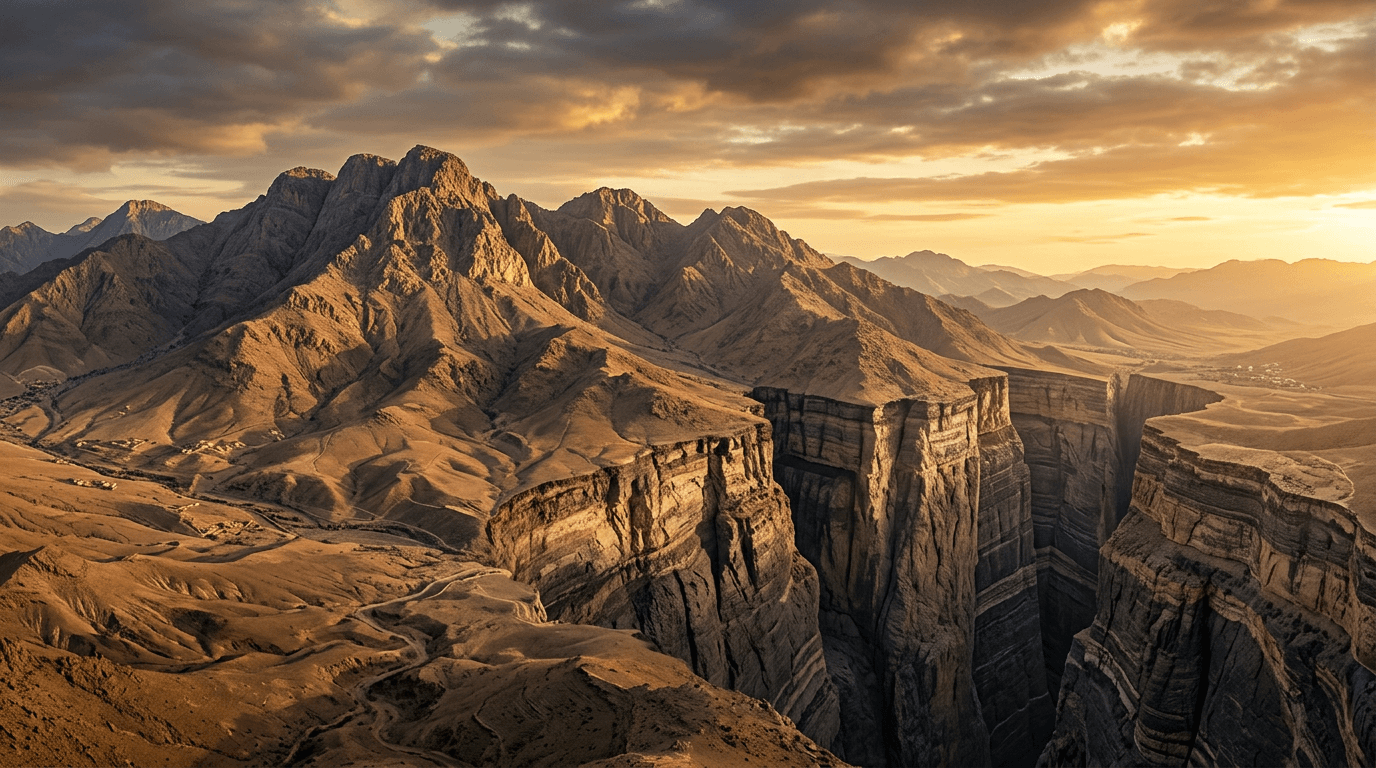
To the eye, a mountain is simply a great mass of rock rising from the land. But the Qur'an describes mountains in a more surprising way, assigning them a function. Again and again, it speaks of mountains as having been "set firm" in the earth, and, most strikingly, likens them to pegs.
Mountains as Pegs
In a short, vivid passage, the Qur'an asks the reader to consider the design of the world around them, and describes the mountains with a single evocative word:
"Have We not made the earth as a wide expanse, And the mountains as pegs?"
(Surah An-Naba, 78:6–7)
A peg, like a tent-peg, is mostly hidden beneath the surface, anchoring what stands above it. The image suggests that a mountain is not merely what rises into view, but something rooted deep below, holding things in place. Muslims have long reflected on the aptness of this description of a mountain as an anchor rather than a mere pile of stone.
Set Firm So the Earth Does Not Shake
The Qur'an goes further, repeatedly linking the mountains to the stability of the earth, describing them as having been set firmly so that the land does not sway or shake with its inhabitants:
"And He has set up on the earth mountains standing firm, lest it should shake with you; and rivers and roads; that ye may guide yourselves;"
(Surah An-Nahl, 16:15)
"And We have set on the earth mountains standing firm, lest it should shake with them, and We have made therein broad highways (between mountains) for them to pass through: that they may receive Guidance."
(Surah Al-Anbiya, 21:31)
This recurring theme, mountains as stabilisers of the ground beneath our feet, is presented by the Qur'an as one of God's mercies upon humankind: a world made firm and habitable, rather than restless and shifting.
Raised High and Made Firm
The Qur'an also invites reflection on the sheer scale and craftsmanship of the mountains, listing them among the signs of a deliberate Creator:
"And at the Mountains, how they are fixed firm?-"
(Surah Al-Ghashiyah, 88:19)
"And made therein mountains standing firm, lofty (in stature); and provided for you water sweet (and wholesome)?"
(Surah Al-Mursalat, 77:27)
Here the mountains are tied to another mercy: fresh water. Mountains gather snow and rain and release it as rivers and springs, a life-giving role the Qur'an quietly acknowledges alongside their stabilising one.
A Sign of Power and Mercy
For the Qur'an, the mountains are not lifeless scenery. They are a demonstration, of a Creator who anchored the land, raised the peaks, stored the water, and made the earth a stable home. And they are a reminder of humility: for all their immensity, the Qur'an says even the mountains will one day be moved by the command of the One who set them.
"Thou seest the mountains and thinkest them firmly fixed: but they shall pass away as the clouds pass away: (such is) the artistry of Allah, who disposes of all things in perfect order: for he is well acquainted with all that ye do."
(Surah An-Naml, 27:88)
Further Reading
- The Qur'an. Read it for yourself, with translation and recitation.
- Sahih al-Bukhari & Sahih Muslim. The two most rigorously authenticated collections of the Prophet's ﷺ sayings.
- Riyad as-Salihin (Imam an-Nawawi), a beloved anthology of hadith on faith, character, and worship.
- The Sealed Nectar (Ar-Raheeq Al-Makhtum), an award-winning biography of the Prophet ﷺ.
- Muhammad: His Life Based on the Earliest Sources. Martin Lings.